

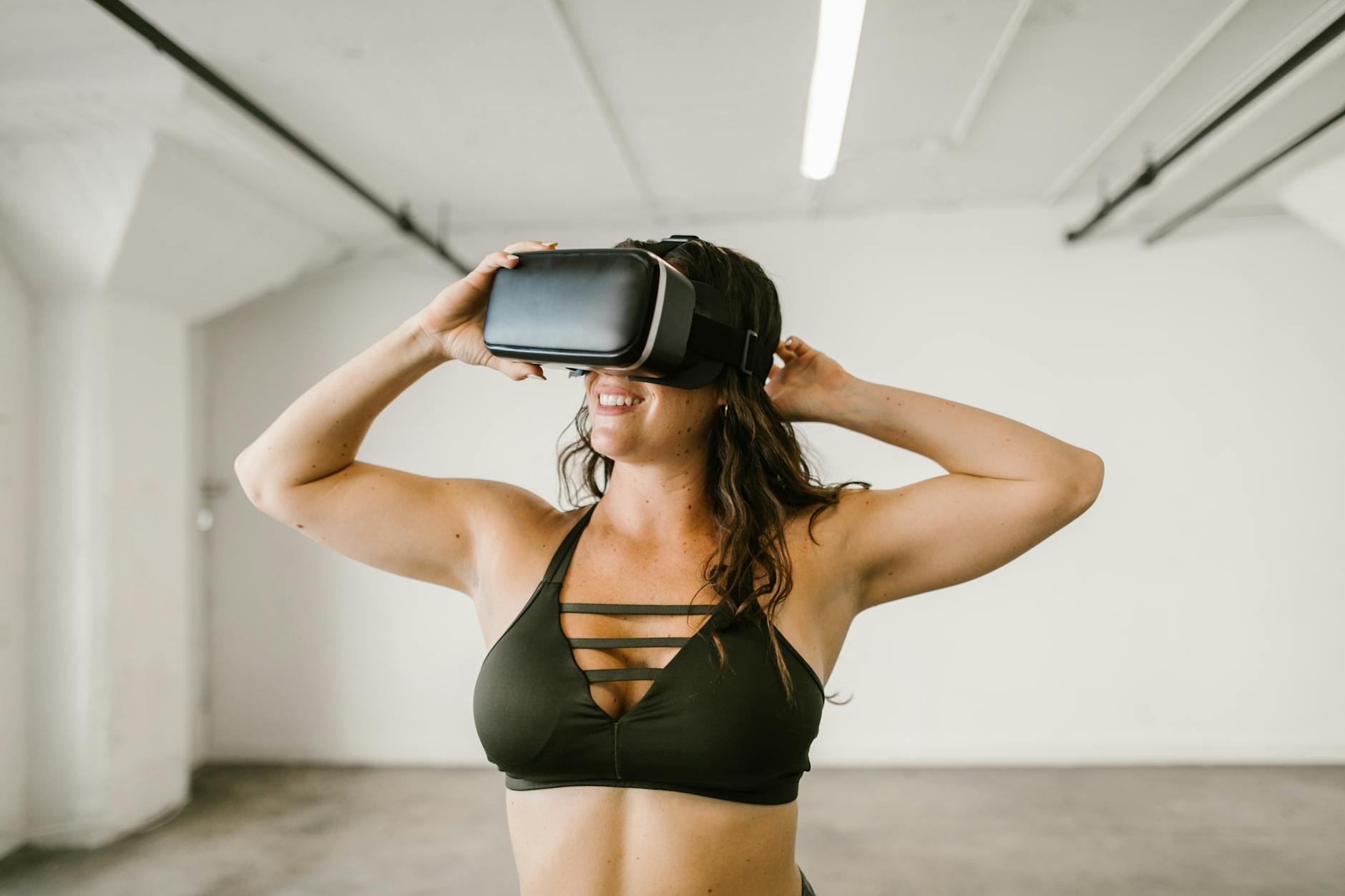
Spatial computing has been "the next big thing" for a decade. The hardware has consistently failed to match the vision: too heavy, too expensive, too short on battery life, too socially awkward to wear in public, too limited in field of view to be genuinely useful. Apple Vision Pro is remarkable engineering at $3,500 — but it's a developer preview, not a tool.
Rokid is different. They've been in production AR hardware since 2014. Nine generations of iteration. Real enterprise deployments in industrial inspection, surgical assistance, remote collaboration, and warehouse operations. Their hardware has been used on the Chinese Space Station. That's not marketing — that's proof of engineering discipline over a decade.
Who Is Rokid and Why Does Lineage Matter?
Rokid was founded in Hangzhou, China in 2014 and achieved unicorn status (>$1B valuation) before most Western AR companies shipped a second product. They've raised over $200M in funding and have a product line that spans consumer, enterprise, and defense applications.
Why does this matter? Because AR hardware is hard. The design constraints are brutal: you need high-brightness displays in a form factor that weighs under 80 grams, with optics that don't distort, thermal management that doesn't burn the user's nose, and software that doesn't crash when you need it most. Companies that get to generation 9 have solved these problems. Companies at generation 1 or 2 haven't.
Rokid's Ar glasses are now in the hands of 1M+ consumers across 100+ countries. The enterprise track record with Fortune 500 companies is documented and verifiable. This is the context in which I evaluate their current consumer product line.
The Current Product Line: Where AR Meets AI
Rokid's current consumer offering combines their AR display hardware with an AI layer that processes voice commands, overlays contextual information, and connects to their ecosystem of applications. The key products:
Rokid AR Glasses (Standard)
The base model pairs Rokid's waveguide display optics with a companion processor unit you keep in your pocket. The glasses themselves are lightweight (under 80g) — close to wearing a pair of regular spectacles. Display brightness is adequate for indoor use and shaded outdoor environments. Field of view is approximately 50 degrees — enough for overlaying information, not enough for immersive gaming.
Use case verdict: Best for information overlay — navigation directions, real-time translation, notification display, hands-free reference during physical work. Not suitable as a laptop replacement.
Rokid AI Glasses Style
The AI-focused variant integrates a voice-driven AI assistant directly into the glasses, enabling real-time queries, language translation, and contextual awareness without pulling out a phone. The "Style" designation signals the form factor priority — these are designed to be worn socially, not just at a workstation.
Use case verdict: The most interesting product for day-to-day professional use. Real-time meeting notes, hands-free reference during site visits, client-facing settings where pulling out a phone would be rude.
The Systems Architect Perspective
I evaluate hardware through the lens of what problems it solves in production environments, not benchmark sheets. Here's what I see when I look at Rokid's current product line:
Remote Collaboration and Field Support
The most immediate practical value I see for African builders is in field support scenarios. Consider the GHS healthcare platform I build and maintain — when a nurse in a remote clinic encounters a system issue, the current resolution path is a phone call with screen sharing. With AR glasses, a remote technician could see exactly what the on-site user sees and overlay instructions directly in their field of view. This is already proven in industrial settings. The hardware is now consumer-priced.
Hands-Free Infrastructure Work
Server room work requires hands. When you're pulling cables, mounting hardware, or tracing connections, you don't want to keep picking up a tablet or phone to reference documentation. AR glasses that overlay rack diagrams, IP address assignments, and cable routing maps directly in your field of view would meaningfully reduce error rates in hardware deployment work.
Accessibility at Scale
The real-time translation capability is underappreciated. Africa has 2,000+ languages. Any system serving the continent at scale eventually hits the multilingual problem. Real-time AR translation as a layer on top of existing interfaces could bypass the need to localize UIs into 20 languages — a significant operational simplification for platforms like eduSYMS.
What AR Hardware Still Can't Do Well
Honest assessment requires acknowledging current limitations:
- Battery life: AR glasses burn power fast. Expect 2–3 hours of active use. For all-day wear scenarios, this remains a hard constraint.
- Outdoor brightness: Waveguide displays struggle in direct sunlight. Rokid's hardware is better than most, but AR overlays wash out in bright outdoor conditions. This is a physics problem that no manufacturer has fully solved.
- App ecosystem: The consumer AR app ecosystem is still thin. The hardware capability exceeds the software that takes advantage of it. This will improve — but today, the killer app for consumer AR hasn't been written yet.
- Social acceptance: Wearing cameras and displays on your face in professional and social settings still triggers friction. This is a cultural adoption curve problem, not an engineering one.
- Prescription compatibility: Most AR glasses require corrective lens inserts or sit over prescription glasses awkwardly. Rokid has solutions, but it adds cost and complexity.
The AI Integration Layer
What differentiates Rokid's 2025/2026 products from earlier generations is the AI integration. Pairing always-present display optics with a voice-activated LLM creates a qualitatively different experience from either technology alone.
The workflow shift: instead of stopping what you're doing to consult your phone, you ask a question and get an answer overlaid in your field of view while your hands stay on whatever you're working on. For any role involving physical work + information lookup — field engineers, clinicians, educators, field technicians — this represents a genuine productivity gain.
I'm watching how Rokid develops their AI platform closely. If they build open APIs for the AI assistant layer (similar to how smartphones opened their OS to third-party apps), this becomes a development platform, not just a device. That's the interesting long-term bet.
Pricing and Value Assessment
Rokid's consumer products are priced significantly below Apple Vision Pro and competitive with Meta's smart glasses line. For the capability delivered — real AR overlays, AI assistant integration, proven hardware lineage — the price-to-value ratio is strong.
For African buyers, the USD price point translates to a significant ZAR figure. This positions Rokid as a serious professional tool rather than a consumer impulse purchase — which is probably the right market positioning for now.
Active promo codes at time of writing:
- Glasses20AFF — 20% off the 49g ultra-light AI AR glasses (the best deal in their current line)
- ROKIDAFF — $20 off sitewide
- AFF20OFF — $20 off Rokid AI Glasses Style specifically
For the AI glasses, use Glasses20AFF — 20% is the strongest discount they've made available to affiliate partners.
Who Should Buy Rokid AR Glasses Today
Buy now if: You do field work that involves frequent information lookup. You're in a profession where hands-free operation has direct safety or efficiency value (healthcare, industrial, field IT). You're a developer who wants to experiment with AR application development on production-quality hardware before the ecosystem matures. You're building AR/VR experiences and need to understand the medium from the inside.
Wait if: You're primarily interested in media consumption or gaming (the app ecosystem isn't there yet for this). You need all-day outdoor wearability. You want a device that's invisible in social settings (we're not there yet culturally).
The builder's verdict: Rokid represents what mature AR hardware looks like. Nine generations of refinement shows. The current products are genuinely useful for specific professional use cases — not just an impressive demo. For any African technologist exploring spatial computing, this is the most credible entry point into the hardware category at a non-enterprise price point.
This article contains affiliate links. If you purchase through them, I earn a commission at no extra cost to you. I only recommend products I believe are worth your consideration.
Exploring AR/VR experiences for your platform or institution? Let's talk — I've been building spatial computing integrations and evaluating this hardware category since 2022.