
In the rapidly evolving landscape of IT infrastructure, the terms "data center" and "server farm" are often used interchangeably—but they represent fundamentally different approaches to computing infrastructure. As businesses increasingly rely on digital transformation, understanding these distinctions becomes crucial for making informed technology investments.
Whether you're a startup planning your first server deployment, an enterprise considering infrastructure expansion, or simply curious about the backbone of our digital world, this guide will demystify these critical technologies and help you make the right choice for your specific needs.
What Are Data Centers?
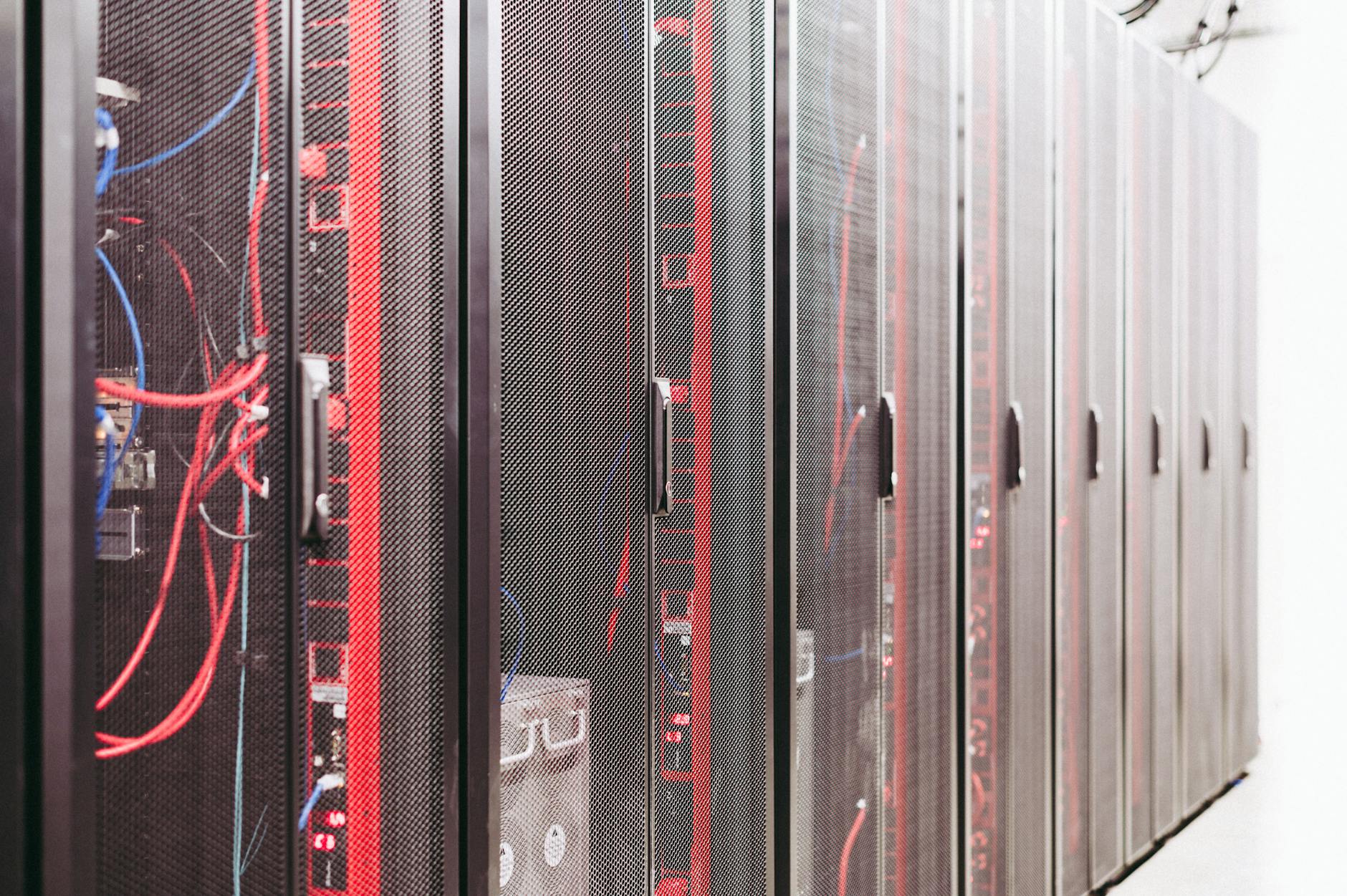
A data center is a specialized physical facility designed to house and operate computing systems, telecommunications equipment, and associated infrastructure components. Think of it as a purpose-built environment that provides the optimal conditions for technology to operate reliably, securely, and efficiently.
Core Components of a Data Center
Power Infrastructure: Uninterruptible Power Supplies (UPS), emergency generators, Power Distribution Units (PDUs), and redundant power feeds ensure continuous operation even during utility outages.
Cooling Systems: Computer Room Air Conditioners (CRAC), hot/cold aisle containment, liquid cooling solutions, and environmental monitoring maintain optimal operating temperatures.
Network Infrastructure: Core network switches, fiber optic cabling, internet connectivity, and network security appliances form the communication backbone.
Physical Security: Biometric access controls, 24/7 surveillance systems, mantrap entries, and security personnel protect the facility.
Data Center Tiers
The Uptime Institute has established a tier classification system that helps organizations understand data center reliability:
- Tier I (99.671%): Basic infrastructure, no redundancy — 28.8 hours annual downtime
- Tier II (99.741%): Redundant components (N+1) — 22 hours annual downtime
- Tier III (99.982%): Concurrently maintainable — 1.6 hours annual downtime
- Tier IV (99.995%): Fault tolerant, 2N redundancy — 26.3 minutes annual downtime
Understanding Server Farms
A server farm is a collection of networked servers that work together as a unified computing resource. Unlike data centers, which focus on the entire facility infrastructure, server farms concentrate on the computational aspects—clustering multiple servers to handle specific workloads efficiently.
Server Farm Architecture
A typical server farm consists of multiple layers working in harmony:
- Load Balancer: Distributes incoming traffic across servers
- Frontend Servers (Web Tier): Handle user-facing requests
- Application Servers (Logic Tier): Process business logic
- Database Servers (Data Tier): Manage data storage and retrieval
- Storage Systems: SAN/NAS for persistent storage
Key Characteristics
Resource Pooling: Multiple servers share computational tasks, storage, and network resources dynamically based on demand.
Load Distribution: Intelligent load balancers distribute incoming requests across available servers to optimize performance.
Fault Tolerance: If one server fails, others continue operating, ensuring service continuity and high availability.
Horizontal Scaling: Easy to add more servers to increase capacity without major infrastructure changes.
Key Differences: Infrastructure vs Hardware
Understanding the fundamental differences between data centers and server farms is crucial for making informed infrastructure decisions:
Primary Focus: Data centers focus on complete facility management; server farms focus on compute resource optimization.
Scope: Data centers encompass the entire physical infrastructure; server farms are collections of networked servers.
Key Components: Data centers include servers, cooling, power, networking, and security; server farms primarily consist of servers and networking equipment.
Location: Data centers are dedicated buildings or spaces; server farms can exist within data centers or other facilities.
Scalability Model: Data centers scale vertically (facility expansion); server farms scale horizontally (adding more servers).
How They Complement Each Other
In most enterprise environments, data centers and server farms work together synergistically. Server farms typically operate within data centers, leveraging the robust infrastructure that data centers provide:
Infrastructure Synergy: Server farms benefit from data center power, cooling, and security infrastructure while focusing on computational efficiency.
Cost Optimization: Shared infrastructure costs across multiple server farms in a single data center reduce overall operational expenses.
Operational Efficiency: Professional data center management allows server farm operators to focus on application performance and scaling.
Cost Analysis and ROI
Data Center Costs
Capital Expenditures (CapEx):
- Facility Construction: $8-15 million per MW capacity
- Power Infrastructure: 30-40% of total CapEx
- Cooling Systems: 15-25% of total CapEx
- Network Infrastructure: 10-15% of total CapEx
Operational Expenditures (OpEx):
- Electricity: $0.08-0.15 per kWh (varies by region)
- Facility Management: $50-100 per rack per month
- Security and Monitoring: $20-40 per rack per month
Server Farm Costs
- Entry Rack Server: $3,000-5,000 (16-24 cores)
- High-Density Server: $8,000-15,000 (64-128 cores)
- Blade Server: $4,000-8,000 (32-64 cores)
- Virtualization Platforms: $3,000-6,000 per host annually
- Management Software: $100-500 per server annually
Decision Framework for African Institutions
For African institutions building digital infrastructure, the choice between data center and server farm investments depends on several factors:
Small to Medium Organizations (50-100 servers)
Recommendation: Server farm in colocation facility
- Lower initial investment ($150K-300K vs $2M+)
- Faster deployment (2-4 months vs 12-18 months)
- Shared infrastructure costs
- Professional facility management
Large Enterprises (1000+ servers)
Recommendation: Private data center
- Lower long-term operational costs
- Complete control over infrastructure
- Custom security and compliance requirements
- Economies of scale for power and cooling
The African Context
This matters particularly for African institutions building sovereign digital infrastructure. Here's why:
Power Reliability: African data centers must account for grid instability. This means higher investment in UPS systems, generators, and potentially renewable energy sources like solar.
Connectivity Costs: International bandwidth remains expensive. Server farms should be designed with efficient caching and edge computing to minimize data transfer costs.
Skills Availability: Data center operations require specialized skills. Colocation facilities may be preferable where local expertise is limited.
Climate Considerations: Hot climates increase cooling costs significantly. Free cooling options and efficient HVAC design become critical cost factors.
Looking Forward
The future of infrastructure in Africa will likely involve hybrid approaches—leveraging public cloud where it makes sense, building sovereign infrastructure where data residency and control matter, and using colocation facilities as stepping stones to private data centers.
Understanding the difference between data centers and server farms isn't just technical knowledge—it's strategic intelligence for building the digital infrastructure that African institutions need.
Building infrastructure in Africa? Let's talk about what architecture makes sense for your context.